Albino Mascara Barb (Dawkinsia assimilis)
Albino Mascara Barb — Dawkinsia assimilis
Pale gold body with bold facial contrast
The Albino Mascara Barb is a striking twist on the classic Indian river barb. This morph replaces the traditional silver body with soft ivory to pale golden tones, while the signature “mascara” eye marking appears lighter but still distinct around the face. Under proper lighting, the scales take on a warm metallic glow, and mature males may develop subtle red or orange highlights in the fins.
Native to flowing rivers and streams of southern India, Dawkinsia assimilis is an active midwater swimmer built for movement. When kept in proper groups, they display synchronized schooling behavior and flashing coloration. The albino variation adds a unique, high-contrast look that stands out in both planted and river-style aquariums.
Growing to 4–5 inches, this species remains peaceful yet energetic, making it ideal for larger community setups that emphasize movement and schooling dynamics.
Aquarium Setup
-
Minimum Tank Size: 55 gallons (75+ gallons recommended for full schools)
-
Group Size: 6 or more strongly recommended
-
Substrate: Sand or fine gravel
-
Flow: Moderate current preferred
-
Décor: Open swimming lanes with rock or plant structure along edges
-
Lighting: Moderate to bright (enhances golden tones)
-
Filtration: Strong biological filtration required
-
Oxygen: Well-oxygenated water preferred
Tank Mates
Best with peaceful to semi-assertive species:
-
Other barbs
-
Rainbowfish
-
Larger tetras
-
Peaceful cichlids
-
Non-aggressive catfish
Avoid aggressive predators and fin-nipping species.
Water Parameters
-
Temperature: 72–78°F (22–26°C)
-
pH: 6.5–7.5
-
Hardness: Soft to medium
-
Water Quality: Clean, stable conditions essential
Diet
Omnivorous:
-
High-quality flakes or pellets
-
Frozen brine shrimp and bloodworms
-
Small insects
-
Occasional vegetable matter
Original: $150.00
-65%$150.00
$52.50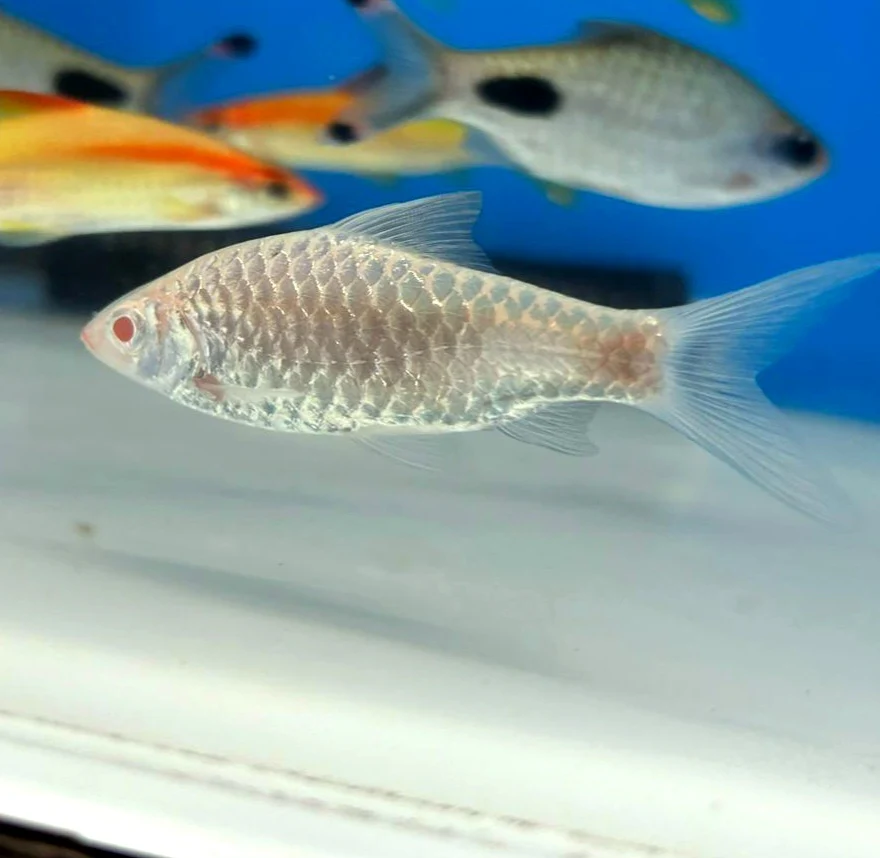
Description
Albino Mascara Barb — Dawkinsia assimilis
Pale gold body with bold facial contrast
The Albino Mascara Barb is a striking twist on the classic Indian river barb. This morph replaces the traditional silver body with soft ivory to pale golden tones, while the signature “mascara” eye marking appears lighter but still distinct around the face. Under proper lighting, the scales take on a warm metallic glow, and mature males may develop subtle red or orange highlights in the fins.
Native to flowing rivers and streams of southern India, Dawkinsia assimilis is an active midwater swimmer built for movement. When kept in proper groups, they display synchronized schooling behavior and flashing coloration. The albino variation adds a unique, high-contrast look that stands out in both planted and river-style aquariums.
Growing to 4–5 inches, this species remains peaceful yet energetic, making it ideal for larger community setups that emphasize movement and schooling dynamics.
Aquarium Setup
-
Minimum Tank Size: 55 gallons (75+ gallons recommended for full schools)
-
Group Size: 6 or more strongly recommended
-
Substrate: Sand or fine gravel
-
Flow: Moderate current preferred
-
Décor: Open swimming lanes with rock or plant structure along edges
-
Lighting: Moderate to bright (enhances golden tones)
-
Filtration: Strong biological filtration required
-
Oxygen: Well-oxygenated water preferred
Tank Mates
Best with peaceful to semi-assertive species:
-
Other barbs
-
Rainbowfish
-
Larger tetras
-
Peaceful cichlids
-
Non-aggressive catfish
Avoid aggressive predators and fin-nipping species.
Water Parameters
-
Temperature: 72–78°F (22–26°C)
-
pH: 6.5–7.5
-
Hardness: Soft to medium
-
Water Quality: Clean, stable conditions essential
Diet
Omnivorous:
-
High-quality flakes or pellets
-
Frozen brine shrimp and bloodworms
-
Small insects
-
Occasional vegetable matter


