Blue Turquoise Rainbow (Melanotaenia lacustris)
Blue Turquoise Rainbow — Melanotaenia lacustris
Liquid sapphire in constant motion
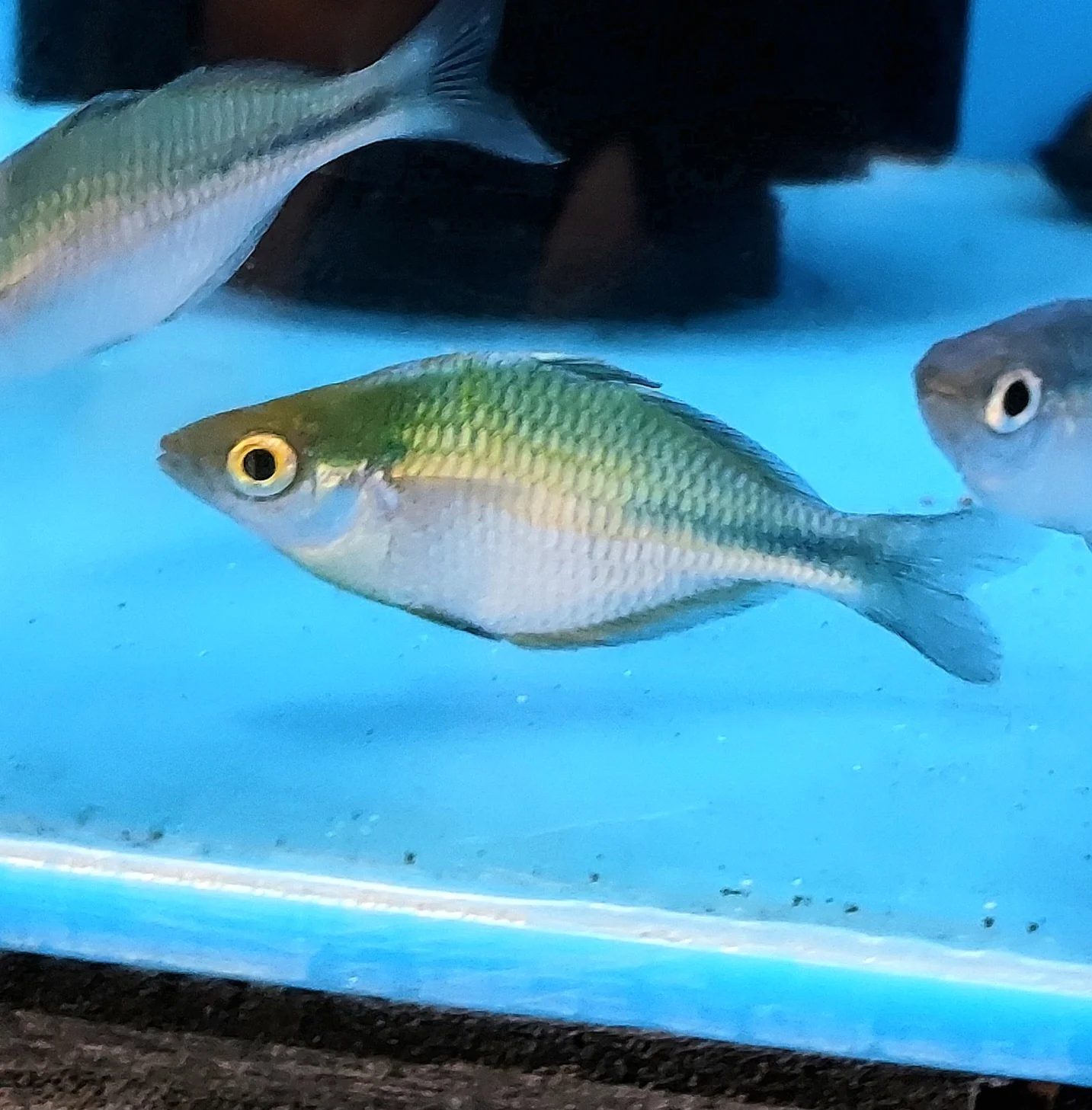
The Blue Turquoise Rainbow is one of the most striking freshwater schooling fish available. A brilliant metallic blue body shifts into turquoise and aqua tones depending on angle and lighting, creating a liquid, iridescent effect as the fish turns. Mature males develop deeper coloration and a taller, more pronounced body shape, especially when displaying to females.
Native to Lake Kutubu in Papua New Guinea, Melanotaenia lacustris thrives in clear, well-oxygenated water. These fish are built for movement — constantly cruising midwater and flashing color in synchronized turns when kept in proper groups. In a well-lit aquarium, a school of Blue Turquoise Rainbows creates a shimmering wave of blue that energizes the entire display.
Growing to 4–5 inches, they are peaceful yet active, making them ideal for larger planted tanks or calm community predator setups where smaller fish are not at risk.
Aquarium Setup
-
Minimum Tank Size: 55 gallons (75+ gallons recommended for full schools)
-
Group Size: 6 or more recommended
-
Substrate: Sand or fine gravel
-
Flow: Moderate current preferred
-
Décor: Open swimming lanes with plants or wood along edges
-
Lighting: Moderate to bright (enhances blue coloration)
-
Filtration: Strong biological filtration required
-
Oxygen: Well-oxygenated water preferred
Tank Mates
Best with peaceful to semi-assertive species:
-
Other rainbowfish
-
Larger tetras
-
Corydoras
-
Peaceful plecos
-
Calm South American cichlids (Severums, Eartheaters)
Avoid aggressive predators and fin-nipping species.
Water Parameters
-
Temperature: 75–82°F (24–28°C)
-
pH: 7.0–8.0
-
Hardness: Moderate to moderately hard
-
Water Quality: Clean and stable conditions essential
Diet
Omnivorous:
-
High-quality flakes or pellets
-
Frozen brine shrimp and bloodworms
-
Small insects
-
Occasional vegetable matter
Original: $28.00
-65%$28.00
$9.80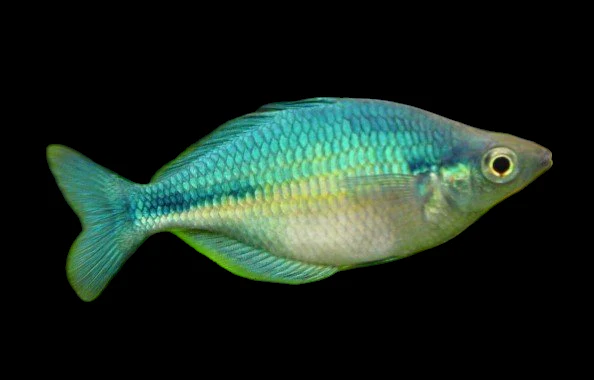
Description
Blue Turquoise Rainbow — Melanotaenia lacustris
Liquid sapphire in constant motion
The Blue Turquoise Rainbow is one of the most striking freshwater schooling fish available. A brilliant metallic blue body shifts into turquoise and aqua tones depending on angle and lighting, creating a liquid, iridescent effect as the fish turns. Mature males develop deeper coloration and a taller, more pronounced body shape, especially when displaying to females.
Native to Lake Kutubu in Papua New Guinea, Melanotaenia lacustris thrives in clear, well-oxygenated water. These fish are built for movement — constantly cruising midwater and flashing color in synchronized turns when kept in proper groups. In a well-lit aquarium, a school of Blue Turquoise Rainbows creates a shimmering wave of blue that energizes the entire display.
Growing to 4–5 inches, they are peaceful yet active, making them ideal for larger planted tanks or calm community predator setups where smaller fish are not at risk.
Aquarium Setup
-
Minimum Tank Size: 55 gallons (75+ gallons recommended for full schools)
-
Group Size: 6 or more recommended
-
Substrate: Sand or fine gravel
-
Flow: Moderate current preferred
-
Décor: Open swimming lanes with plants or wood along edges
-
Lighting: Moderate to bright (enhances blue coloration)
-
Filtration: Strong biological filtration required
-
Oxygen: Well-oxygenated water preferred
Tank Mates
Best with peaceful to semi-assertive species:
-
Other rainbowfish
-
Larger tetras
-
Corydoras
-
Peaceful plecos
-
Calm South American cichlids (Severums, Eartheaters)
Avoid aggressive predators and fin-nipping species.
Water Parameters
-
Temperature: 75–82°F (24–28°C)
-
pH: 7.0–8.0
-
Hardness: Moderate to moderately hard
-
Water Quality: Clean and stable conditions essential
Diet
Omnivorous:
-
High-quality flakes or pellets
-
Frozen brine shrimp and bloodworms
-
Small insects
-
Occasional vegetable matter