L183 Starlight Bristlenose Pleco (Ancistrus dolichopterus)
L183 Starlight Bristlenose Pleco (Ancistrus dolichopterus)
The L183 Starlight Bristlenose Pleco is one of the most iconic and visually striking Ancistrus species, prized for its deep black body covered in fine white “starlike” spots and its distinct white edging along the dorsal and tail fins. This high-contrast pattern gives the fish a glowing, celestial appearance—especially under low lighting.
As it matures, males develop the signature bristles (tentacles) on their snout, adding character and making them easily distinguishable from females. Unlike common plecos, the L183 remains relatively small and manageable, making it a perfect addition to both community and specialty aquariums.
Hardy, functional, and beautiful, the Starlight Bristlenose is not only a showpiece but also an excellent algae grazer.
Care & Husbandry
Tank Size:
A minimum of 20–30 gallons is suitable for a single specimen, though 30–40+ gallons is recommended for long-term care or breeding setups. Provide driftwood, caves, and shaded hiding spots.
Diet:
Primarily herbivorous with some omnivorous tendencies:
- High-quality algae wafers or herbivore pellets (staple diet)
- Fresh vegetables such as zucchini, cucumber, spinach, and green beans
- Driftwood is essential for digestion and grazing
- Occasional protein (bloodworms, brine shrimp) as a supplement
Feed daily, especially after lights out.
Tank Mates:
Peaceful and community-friendly:
- Compatible: Tetras, rasboras, angelfish, gouramis, discus, and other peaceful species
- Use Caution: Other plecos (may become territorial, especially males)
- Avoid: Highly aggressive fish that may harass bottom dwellers
Water Parameters:
- Temperature: 75–82°F
- pH: 6.0–7.5
- Water Hardness: Soft to moderately hard
- Moderate flow and strong filtration recommended
- Maintain clean, stable water with regular water changes
Additional Notes
- Maximum Size: ~4–5 inches
- Lifespan: 5–10+ years
- Behavior: Peaceful, nocturnal, algae grazer
- Breeding: Readily breeds in captivity with caves and proper conditioning
Original: $25.00
-65%$25.00
$8.75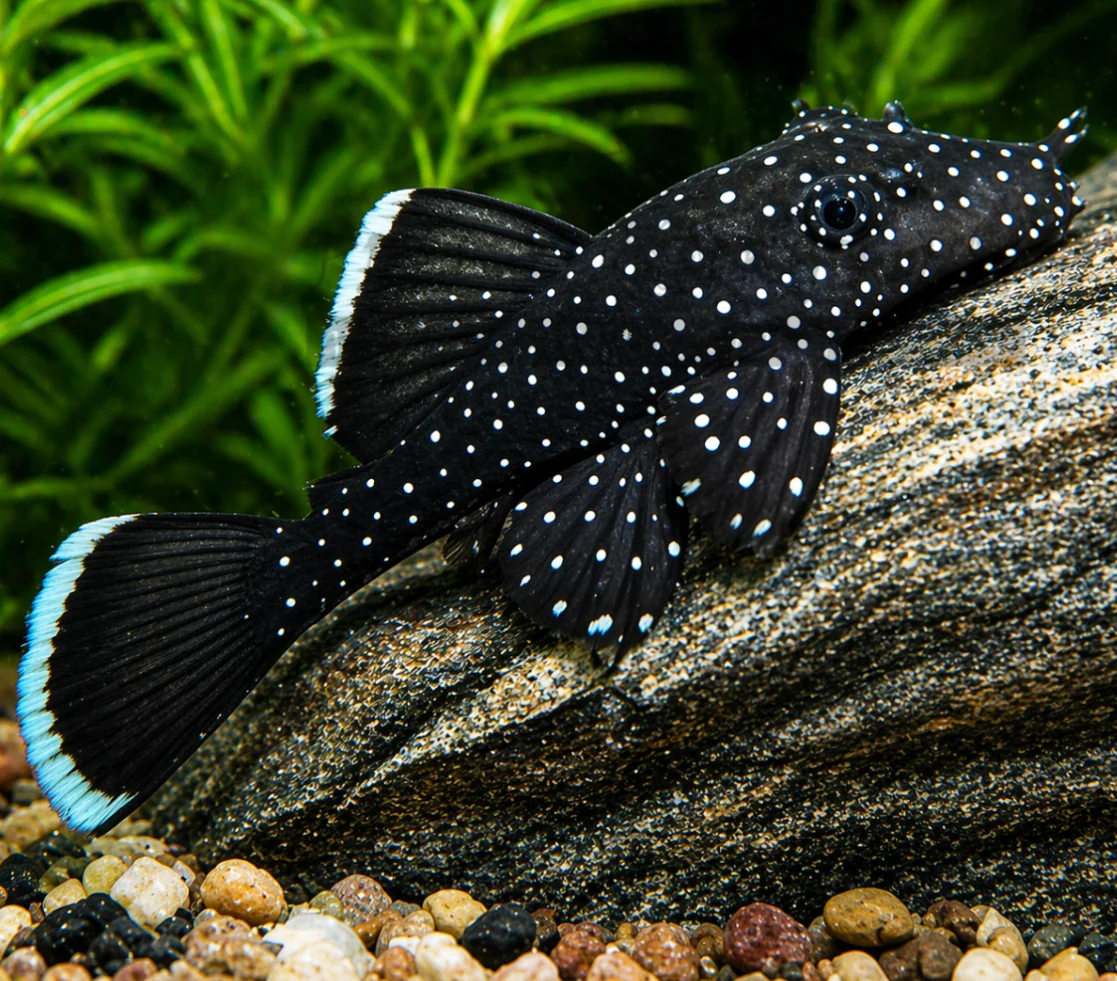
Description
L183 Starlight Bristlenose Pleco (Ancistrus dolichopterus)
The L183 Starlight Bristlenose Pleco is one of the most iconic and visually striking Ancistrus species, prized for its deep black body covered in fine white “starlike” spots and its distinct white edging along the dorsal and tail fins. This high-contrast pattern gives the fish a glowing, celestial appearance—especially under low lighting.
As it matures, males develop the signature bristles (tentacles) on their snout, adding character and making them easily distinguishable from females. Unlike common plecos, the L183 remains relatively small and manageable, making it a perfect addition to both community and specialty aquariums.
Hardy, functional, and beautiful, the Starlight Bristlenose is not only a showpiece but also an excellent algae grazer.
Care & Husbandry
Tank Size:
A minimum of 20–30 gallons is suitable for a single specimen, though 30–40+ gallons is recommended for long-term care or breeding setups. Provide driftwood, caves, and shaded hiding spots.
Diet:
Primarily herbivorous with some omnivorous tendencies:
- High-quality algae wafers or herbivore pellets (staple diet)
- Fresh vegetables such as zucchini, cucumber, spinach, and green beans
- Driftwood is essential for digestion and grazing
- Occasional protein (bloodworms, brine shrimp) as a supplement
Feed daily, especially after lights out.
Tank Mates:
Peaceful and community-friendly:
- Compatible: Tetras, rasboras, angelfish, gouramis, discus, and other peaceful species
- Use Caution: Other plecos (may become territorial, especially males)
- Avoid: Highly aggressive fish that may harass bottom dwellers
Water Parameters:
- Temperature: 75–82°F
- pH: 6.0–7.5
- Water Hardness: Soft to moderately hard
- Moderate flow and strong filtration recommended
- Maintain clean, stable water with regular water changes
Additional Notes
- Maximum Size: ~4–5 inches
- Lifespan: 5–10+ years
- Behavior: Peaceful, nocturnal, algae grazer
- Breeding: Readily breeds in captivity with caves and proper conditioning