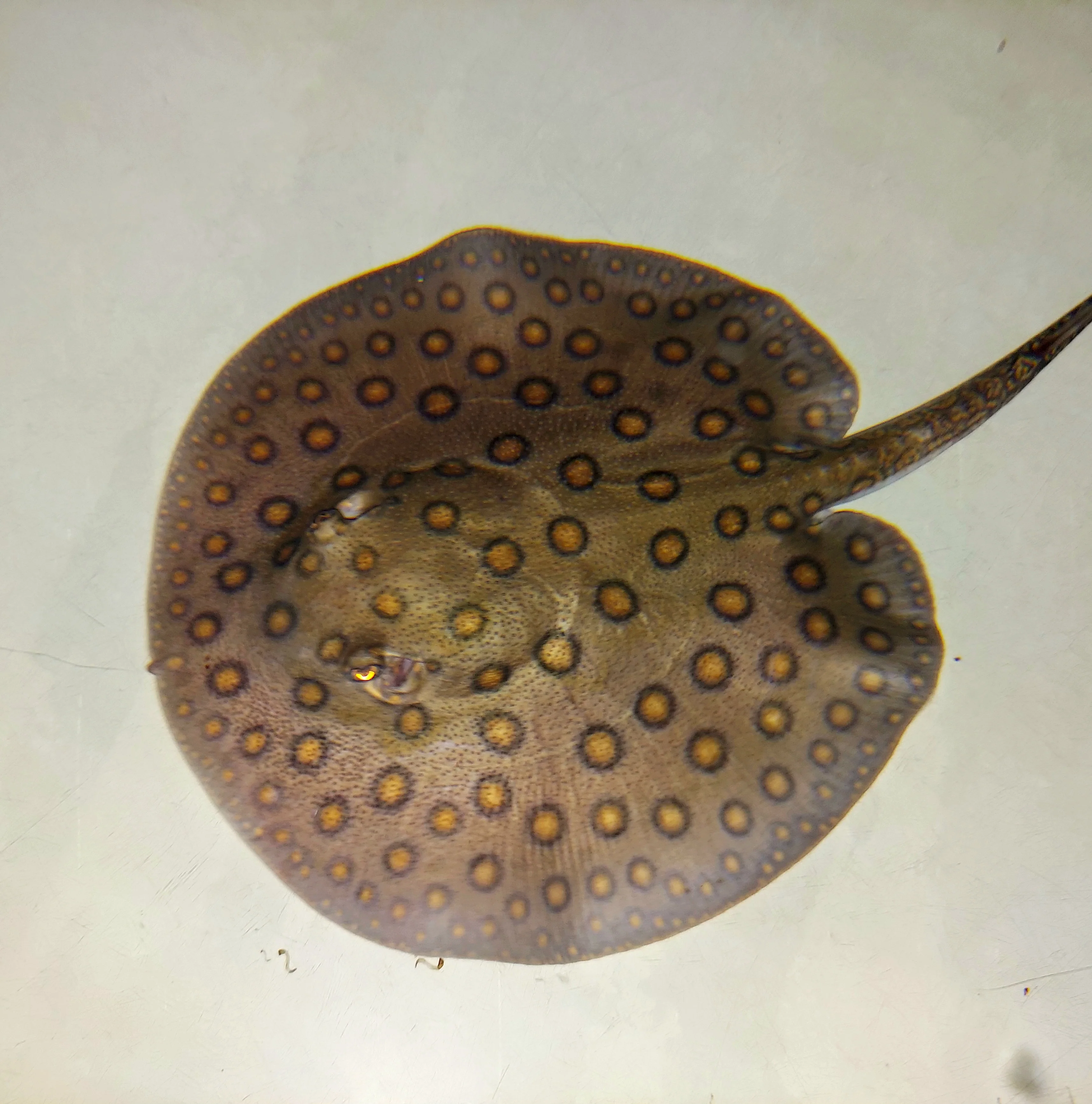
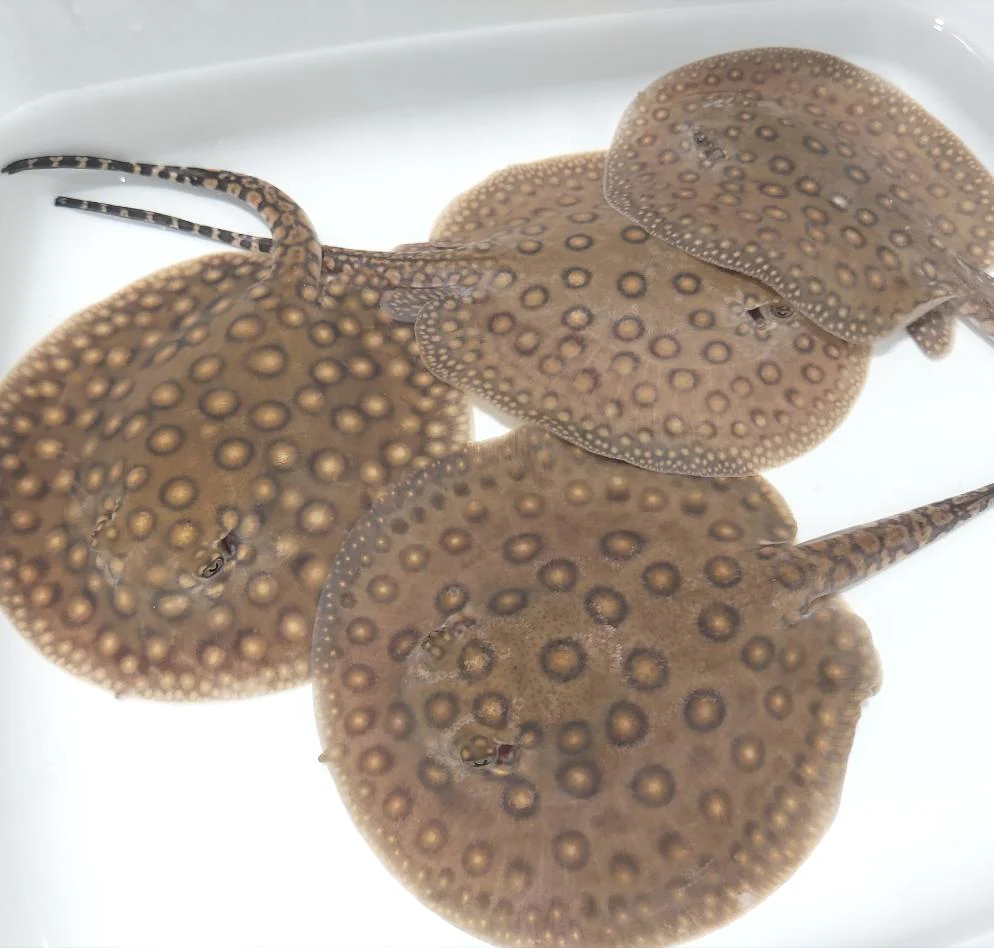
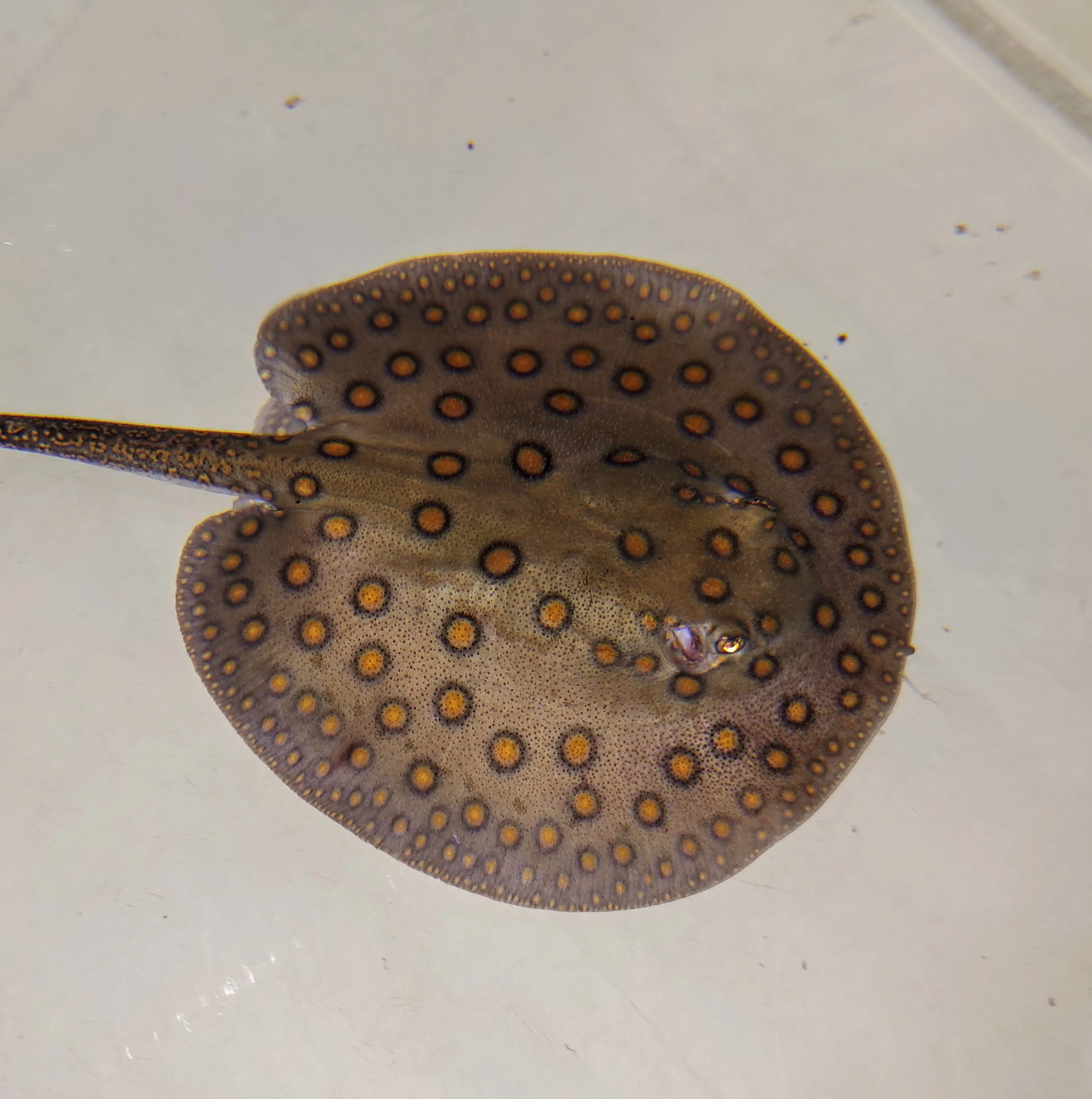
Motoro Stingray (Potamotrygon motoro)
This species has a very wide natural range, taking in parts of Colombia, Peru, Bolivia, Brazil, Paraguay, Uruguay and Argentina. It’s been recorded in the main Amazon basin and numerous smaller rivers including the Rio Orinoco, Rio Uruguay, Rio Paraná and Rio Paraguay.
Strictly speaking, decor isn’t really necessary in a tank set up to house rays. You can however add some large chunks of bogwood, beech branches or smooth rocks if you wish. Ensure that any such furnishings are too heavy to be moved around or secured to the tank in some way, and that there is as much open swimming space as possible. Dim lighting is preferable, although once settled in most rays will also be active under brighter conditions. Plants that require rooting in the substrate will be eaten, but you could try species that can be attached to items of decor, such as Java fern or Anubias spp. Even these may not survive the rays’ attention though.
Choice of substrate is to a large extent down to personal preference. Some hobbyists use river sand which is an excellent choice, especially for juveniles. It’s arguably the closest representation of what the speciesencounters in nature. Others use standard aquarium gravel of varying grades. The third possiblity is simply to omit substrate completely. While this certainly allows for easier tank maintenance, it can make the set-up appear a little stark and unnatural. Rays also like to bury themselves in sand when stressed and are usually found in sandy or muddy habitats in nature so to deny them the option of cover seems rather cruel to us.
Filtration is one of the most important aspects of a ray set-up. A large and efficient biological filter is needed to cope with the amounts of biological waste produced by an active, predatory fish of this size. If possible choose a sump–type arrangement, as this allows most of the equipment to be located outside the tank. Not only will maintenance be far simpler but there is less chance of the rays destroying anything or worse, burning themselves by resting on a submerged heaterstat. Alternatively install one or more high qualty external canister filters. Aim to turn over the entire tank volume around four times per hour, and position the outflow from the filter so that there is a bit of a current running down the tank. If this is placed at the surface the resulting agitation will also provide the high oxygenation levels required by rays. If using a sump allowing the water to fall a couple of inches between sections will also oxygenate the water sufficiently.
Tank maintenance must be similarly stringent. Weekly water changes of around 50% should be considered standard for a ray tank. Although it’s been proven that they can withstand fairly high levels of nitrates, build-ups of other nitrogenous wastes are not tolerated.
You’ll also need a very tightly-fitting cover as rays will sometimes (particularly when feeding)come right up to the water surface and may breach as much as half their body. Attempting to retrieve a couple of feet of venomous fish from the floor would likely be a memorable experience for all the wrong reasons!
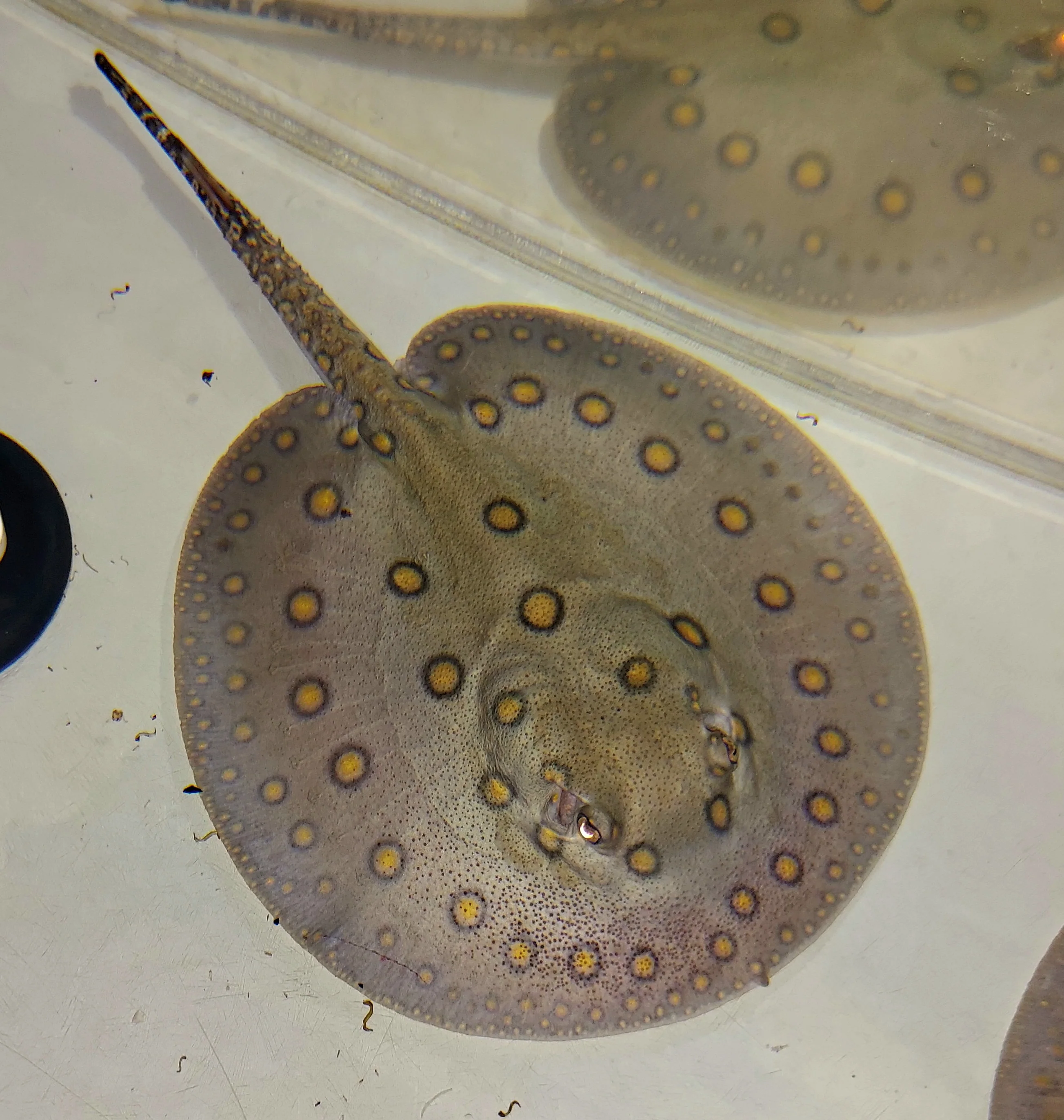
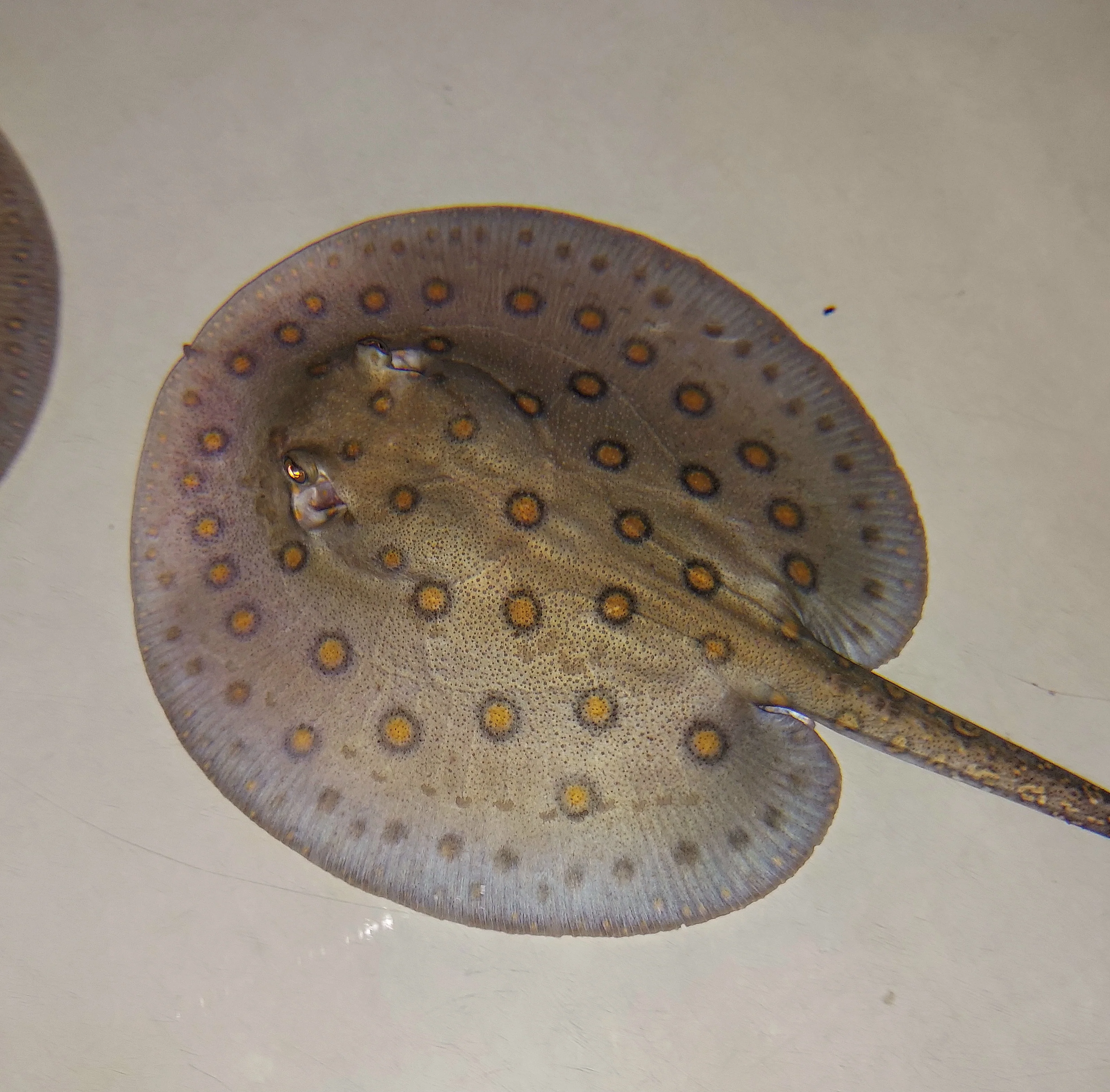
Description
This species has a very wide natural range, taking in parts of Colombia, Peru, Bolivia, Brazil, Paraguay, Uruguay and Argentina. It’s been recorded in the main Amazon basin and numerous smaller rivers including the Rio Orinoco, Rio Uruguay, Rio Paraná and Rio Paraguay.
Strictly speaking, decor isn’t really necessary in a tank set up to house rays. You can however add some large chunks of bogwood, beech branches or smooth rocks if you wish. Ensure that any such furnishings are too heavy to be moved around or secured to the tank in some way, and that there is as much open swimming space as possible. Dim lighting is preferable, although once settled in most rays will also be active under brighter conditions. Plants that require rooting in the substrate will be eaten, but you could try species that can be attached to items of decor, such as Java fern or Anubias spp. Even these may not survive the rays’ attention though.
Choice of substrate is to a large extent down to personal preference. Some hobbyists use river sand which is an excellent choice, especially for juveniles. It’s arguably the closest representation of what the speciesencounters in nature. Others use standard aquarium gravel of varying grades. The third possiblity is simply to omit substrate completely. While this certainly allows for easier tank maintenance, it can make the set-up appear a little stark and unnatural. Rays also like to bury themselves in sand when stressed and are usually found in sandy or muddy habitats in nature so to deny them the option of cover seems rather cruel to us.
Filtration is one of the most important aspects of a ray set-up. A large and efficient biological filter is needed to cope with the amounts of biological waste produced by an active, predatory fish of this size. If possible choose a sump–type arrangement, as this allows most of the equipment to be located outside the tank. Not only will maintenance be far simpler but there is less chance of the rays destroying anything or worse, burning themselves by resting on a submerged heaterstat. Alternatively install one or more high qualty external canister filters. Aim to turn over the entire tank volume around four times per hour, and position the outflow from the filter so that there is a bit of a current running down the tank. If this is placed at the surface the resulting agitation will also provide the high oxygenation levels required by rays. If using a sump allowing the water to fall a couple of inches between sections will also oxygenate the water sufficiently.
Tank maintenance must be similarly stringent. Weekly water changes of around 50% should be considered standard for a ray tank. Although it’s been proven that they can withstand fairly high levels of nitrates, build-ups of other nitrogenous wastes are not tolerated.
You’ll also need a very tightly-fitting cover as rays will sometimes (particularly when feeding)come right up to the water surface and may breach as much as half their body. Attempting to retrieve a couple of feet of venomous fish from the floor would likely be a memorable experience for all the wrong reasons!


